I usually keep Thursday afternoons for team-building activities and fun creative workshops. Thursdays tend to belong learning and teaching days for me and my students, by the end, they’re often tired and unable to focus. So this time, I designed a creative workshop to explore ideas for our next Furniture Design Project.
It was engaging, collaborative, a little bit messy, and most importantly lots of fun. I remember we had a fire drill in the middle of it, and students were not too keen about leaving. One said, “Oh, I left my art inside!” —a small but meaningful moment showing how connected she felt to the piece of work she had just created in the classroom. Others expressed how much fun they were having during the workshop. And this, I think, is exactly what we need as educators: to learn and to enjoy learning.
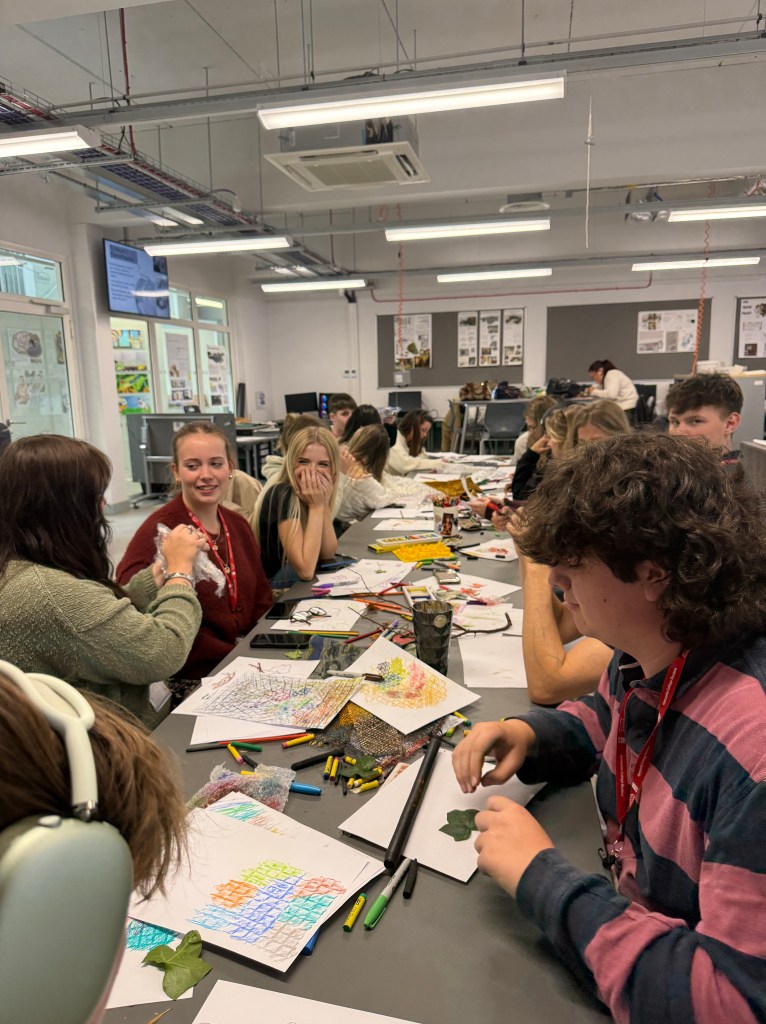
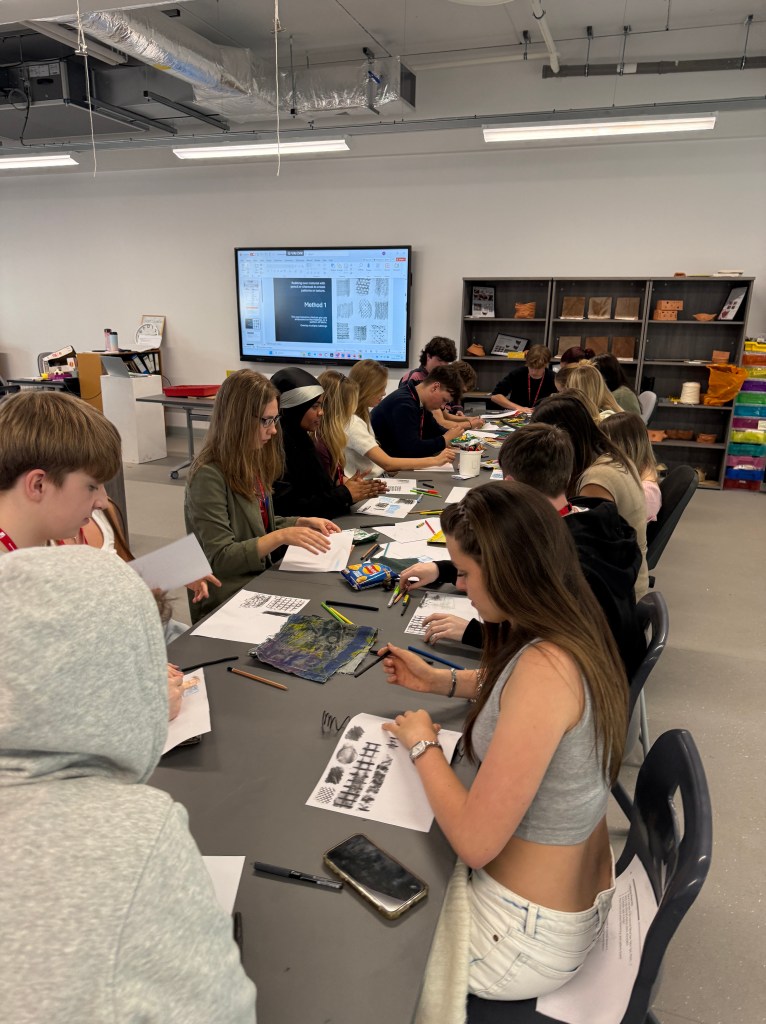
As an expert in embodied learning and space, I intentionally use spatial design as part of the workshop experience. Thanks to the flexible furniture in our studio, we can rearrange it to suit different activities. For this particular learning task, arranging long rows of tables where students could share materials and sit close together supported the social interactions essential for creative collaboration and made sharing material across a whole group easier than having students seated in their normal clusters of tables. It also gave students this sense of community which I am trying to encourage in this cohort.
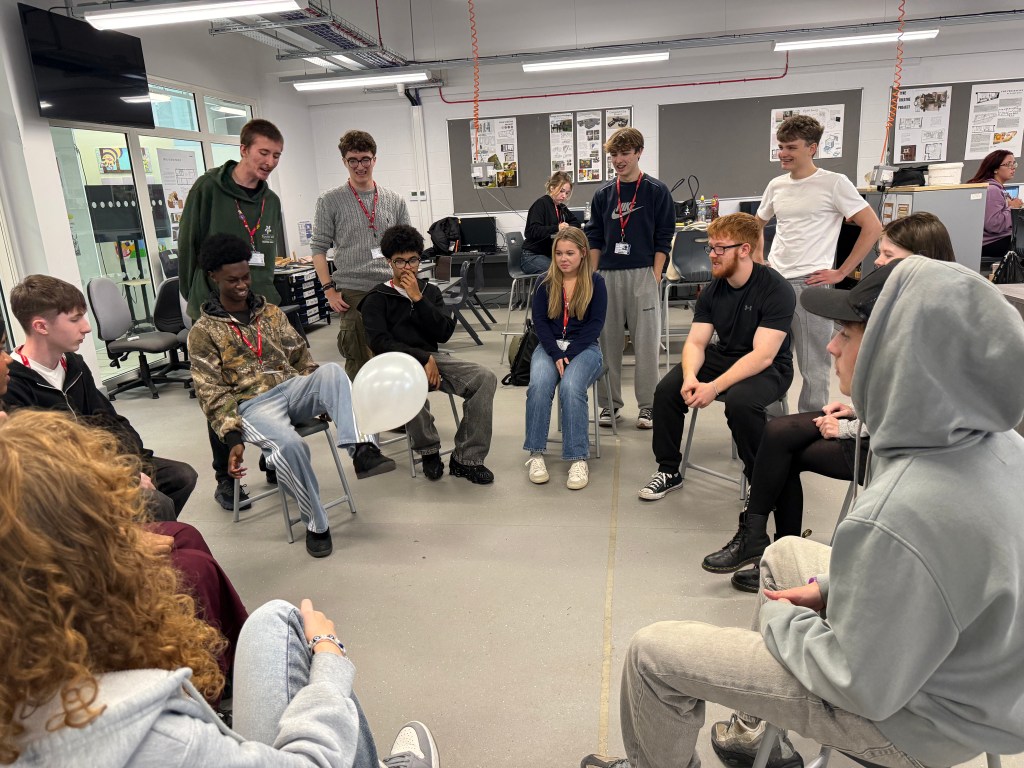
It’s a large studio with many students, so setting up the space takes effort. Rather than doing it myself, I engaged the students in rearranging their learning space. This not only made the learning process more embodied, but also helped them understand the importance of space in supporting their learning.

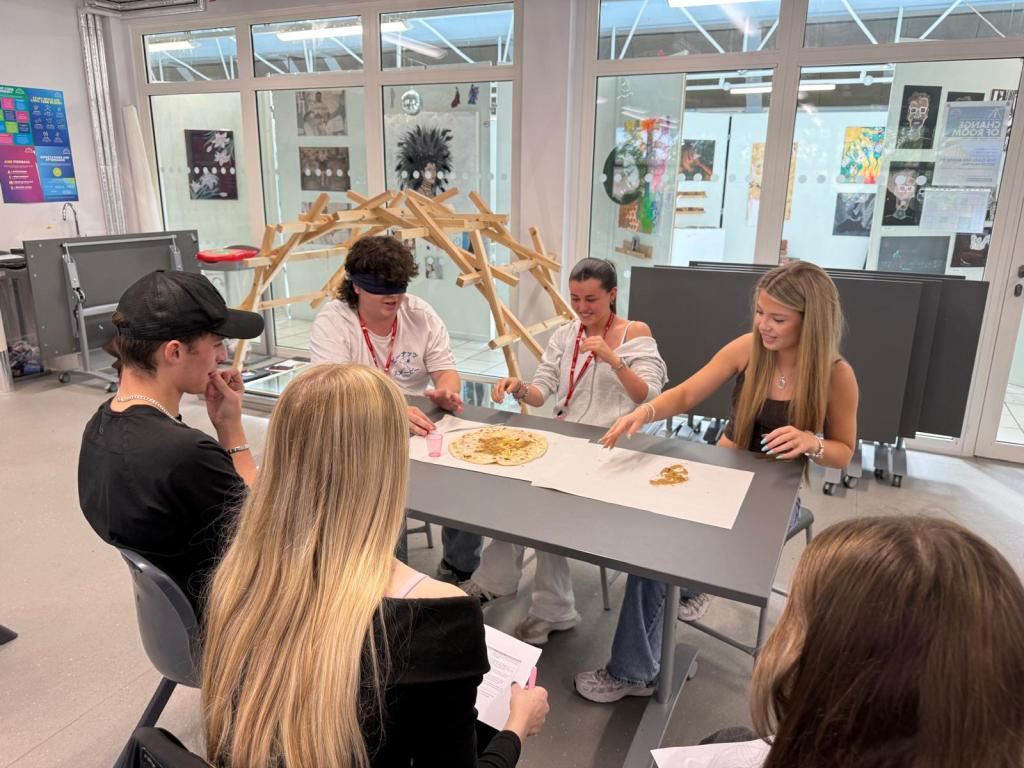
I projected the layout on the screen and divided them into two groups. Each group rearranged their section, and to make it more exciting, I turned it into a small competition—the first group to finish would win a prize. I hadn’t planned one in advance, but luckily found a box of sealed crisp bags from a previous staff event, which became the perfect prize. It added a fun sensory (and gustatory!) element to the activity and reinforced teamwork in a light-hearted way. This tweak ticks another box in the “Embodied Learning Framework” (A proposed framework in my dissertation-it will definitely appear as a publication soon 😊).
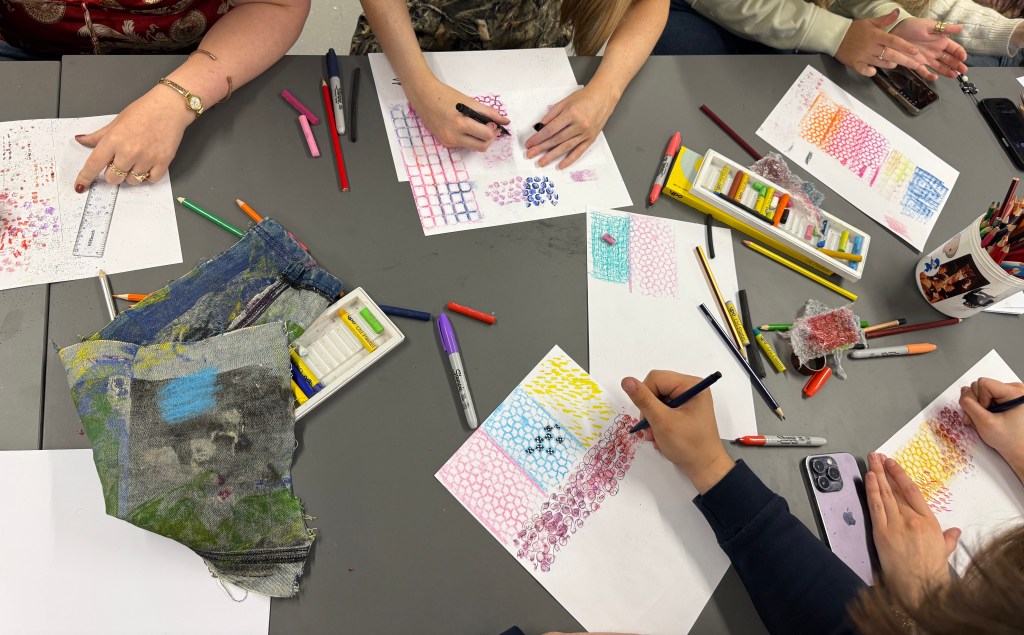
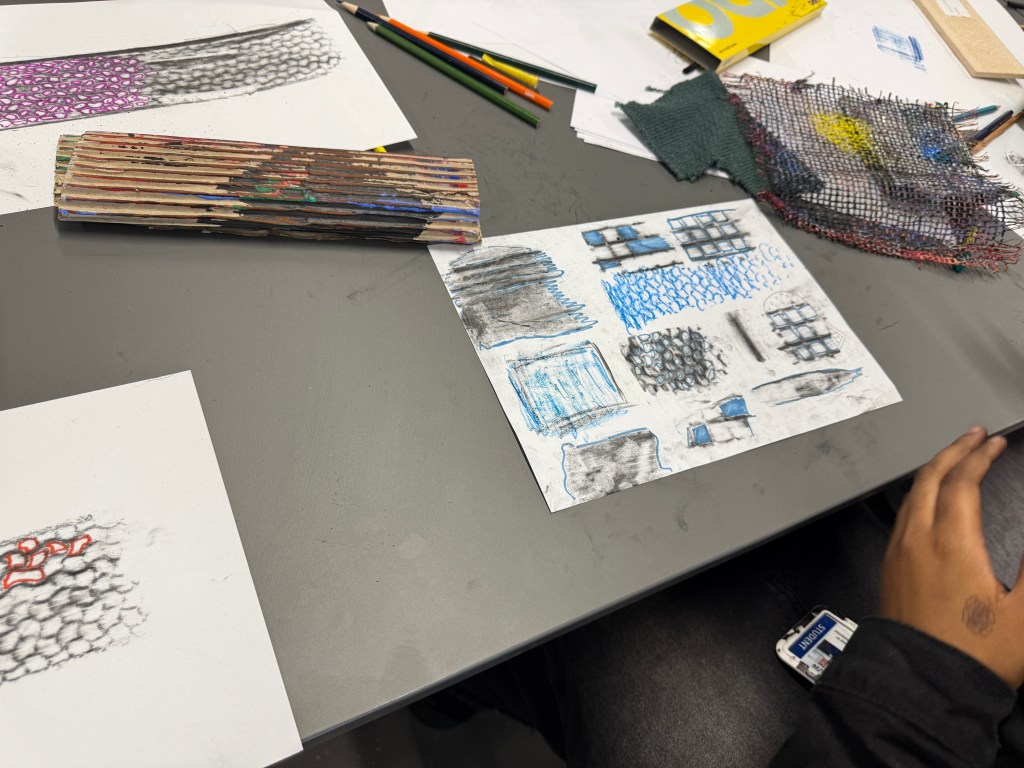
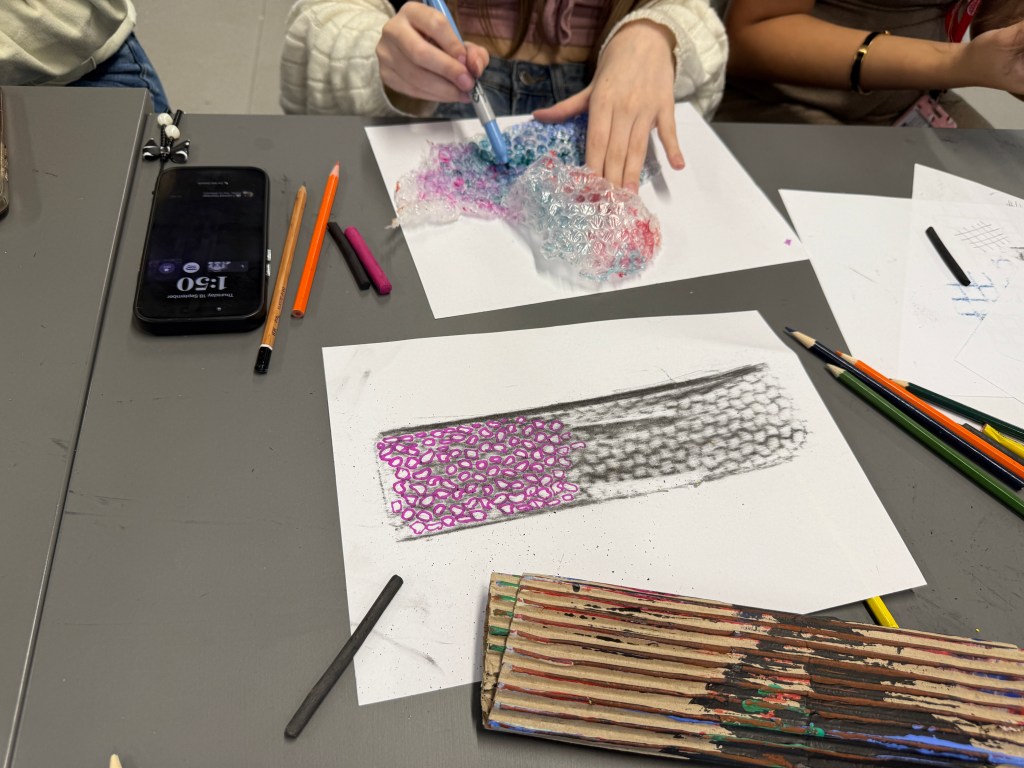
During the workshop, students explored creative methods for generating design ideas for their upcoming project. One method involved rubbing different textures and indented surfaces—fabric, springs, wood, even the backs of tiles—using a variety of media such as charcoal, pastel, pencil, and markers. They layered rubbings, added fine-line patterns, and experimented with shading and colour mixing. The results were beautiful and unexpected—patterns began to emerge organically through the process.
Another approach focused on drawing inspiration from form. I had collected a few objects from around the college, but nature is always the richest source for organic forms. With the workshop taking place in autumn, the season offered an abundance of colour and texture. I asked two students to collect natural materials from outdoors for the rest of the group to use.
I could have gathered the materials myself, but involving the students made their learning more embodied. If time allowed, I would have asked all students to collect their own pieces—but that usually leads to heaps of leaves, branches, and stones (and quite a bit of cleanup!).
Using natural forms as inspiration proved to be more challenging for some. Many initially struggled to see how an object’s shape could be abstracted into a design idea. However, getting them to feel the texture of the object, and draw it was enough for this learning task. It is through follow-up sessions, where students are introduced to how other professionals have used this method to explore ideas, that their understanding of the concept deepens. Then, through their own research of precedents and reapplying this techniques, they gain fuller grasp of it. The embodied task was an igniting spark that set the foundation for interest and engagement in this learning process.
Starting with this embodied creative workshop provided an essential foundation for further learning. It captured students’ attention, encouraged participation, and helped them make meaningful connections between idea creation, material and pattern exploration – while highlighting the important role of space in making this learning task more embodied, collaborative, and feasibleIn summary, embodied learning and spatial design work hand in hand. The space itself becomes an active participant in the learning process—supporting creativity, collaboration, deeper engagement and embodiedness.
 Nagham El Elani
Leave a comment