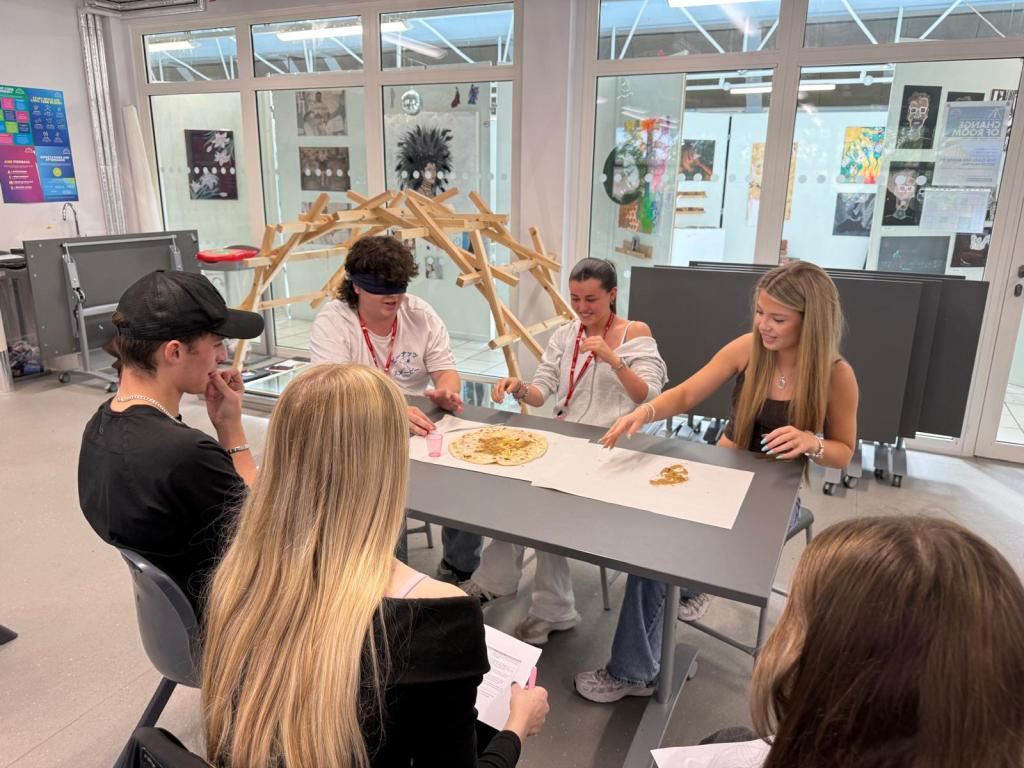
In my PhD research on Embodied Learning which I am doing at Newcastle University, I identified a number of interactions that, when activated, influence how embodied a learning task becomes. As part of the thesis I introduced a framework that breaks down Embodied Learning into constructs (main categories), each category consists of dimensions. One of these categories is Sensorimotor Interactions, under which different senses (gustatory, olfactory, and haptic) are dimensions, another dimension is body locomotion (body moving). The main question was to find out how the learning space can enhance this embodied learning experience.
For induction week at Newcastle College, and as part of my job as a lecturer for interior and architecture students Level 3, I designed an activity that placed these dimensions at the centre of learning – Senses and Body Locomotion.
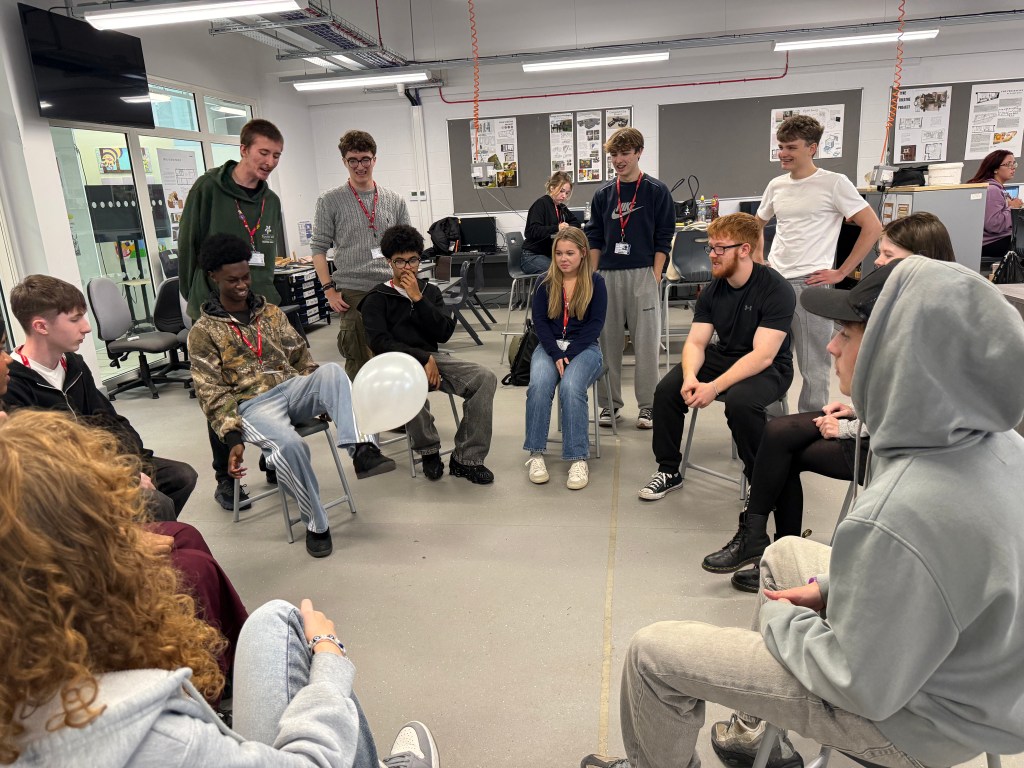
To begin, I asked students to modify the classroom space so it could support the task. Since they were still new to the idea of the possibility of the space being flexible and actually can be modified to support learning, I had to provide some guidance. Using a visual map of the layout, and demonstrating how the tables can be folded, they then participated and moved chairs, folded tables, and stacked them to the side, creating an open area in the middle (Open Spatial Mode). Only the stations needed for the activities remained. This simple act of rearranging the space meant that students were already engaging their bodies and becoming aware of how space impacts learning. In this process they are developing consciousness of the space they are in and learning the importance of considering the space as an enabler of their learning.
I’m grateful to Newcastle College and the management team of the Mandela Building for considering my requests during renovations. We moved into a large studio, that was well ventilated, with natural light and we were the only class that had flexible, stackable furniture, and this allowed the idea of changing the space and alternating between spatial modes possible, bringing more embodied learning into our pedagogy.
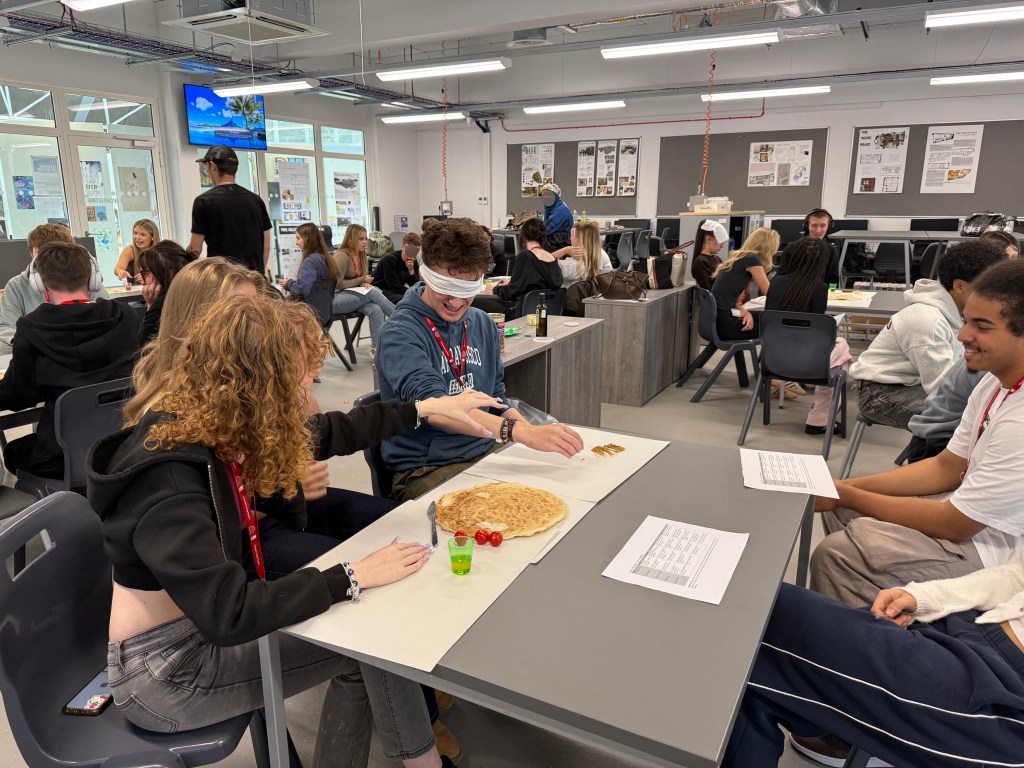
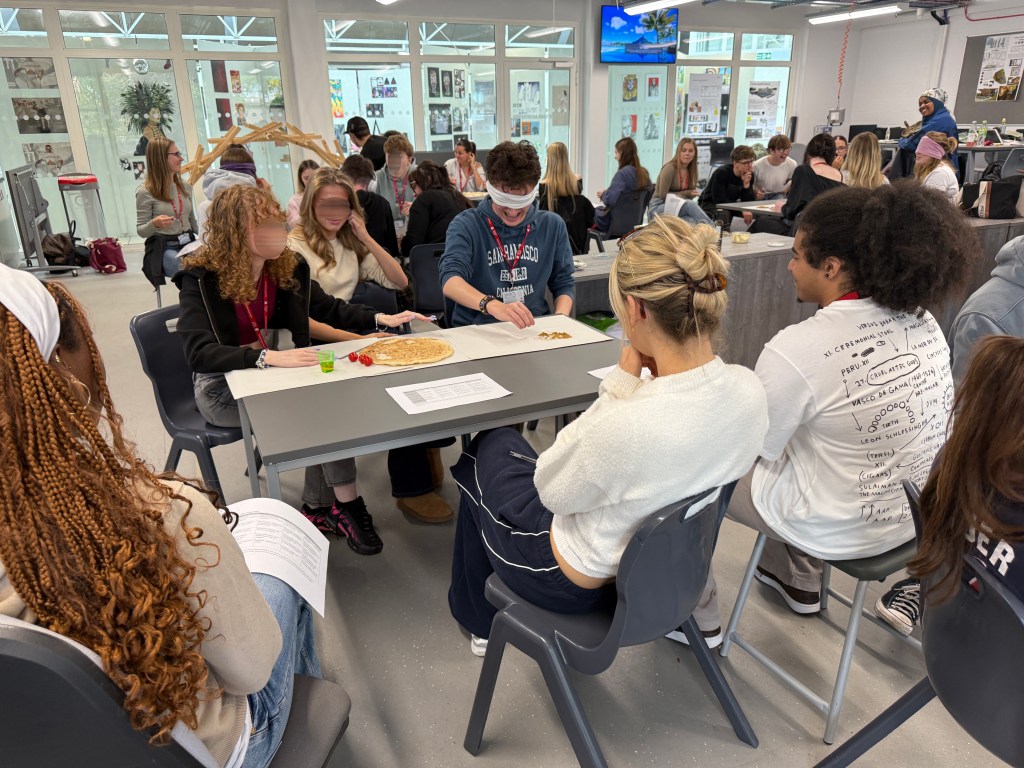
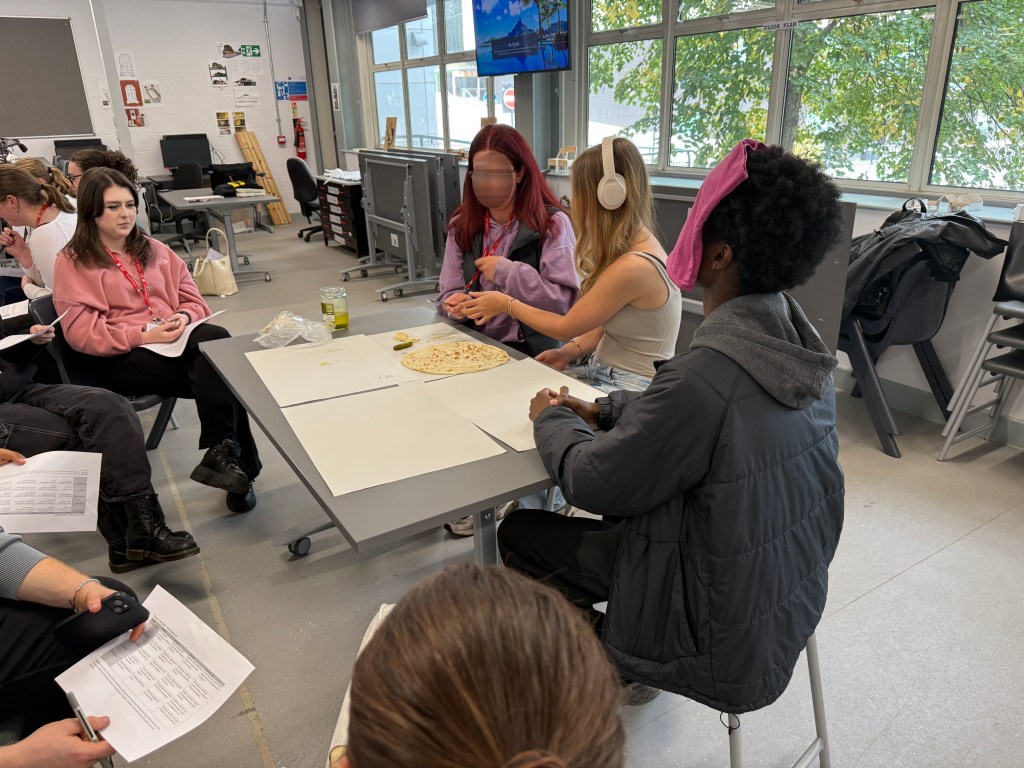
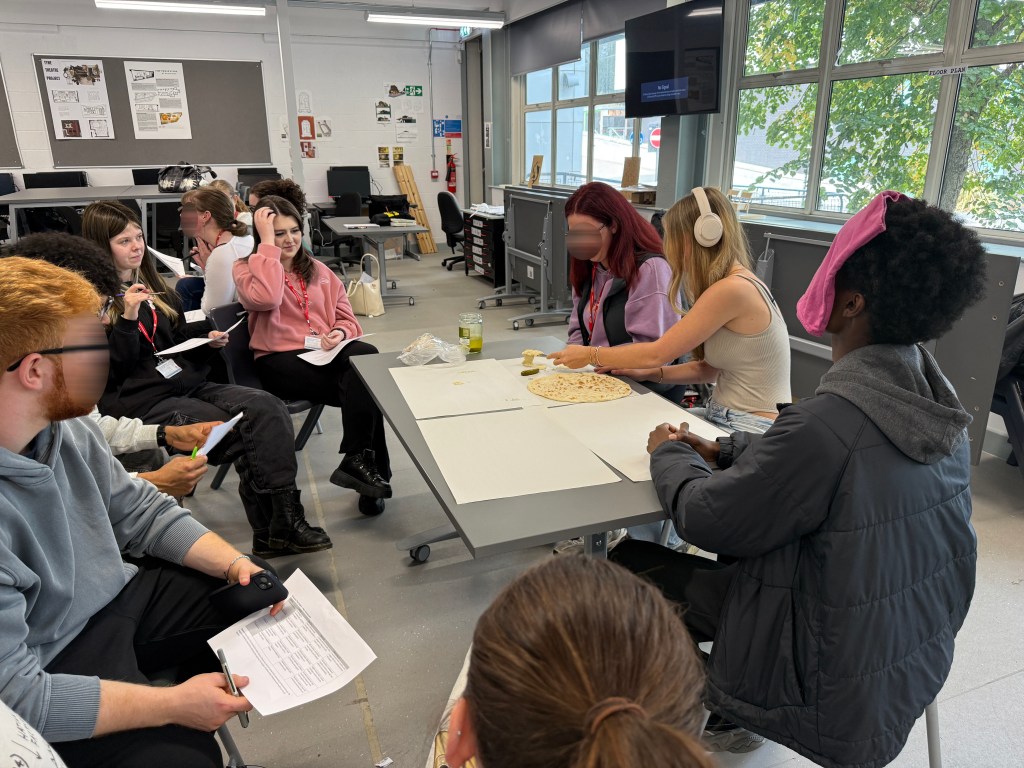
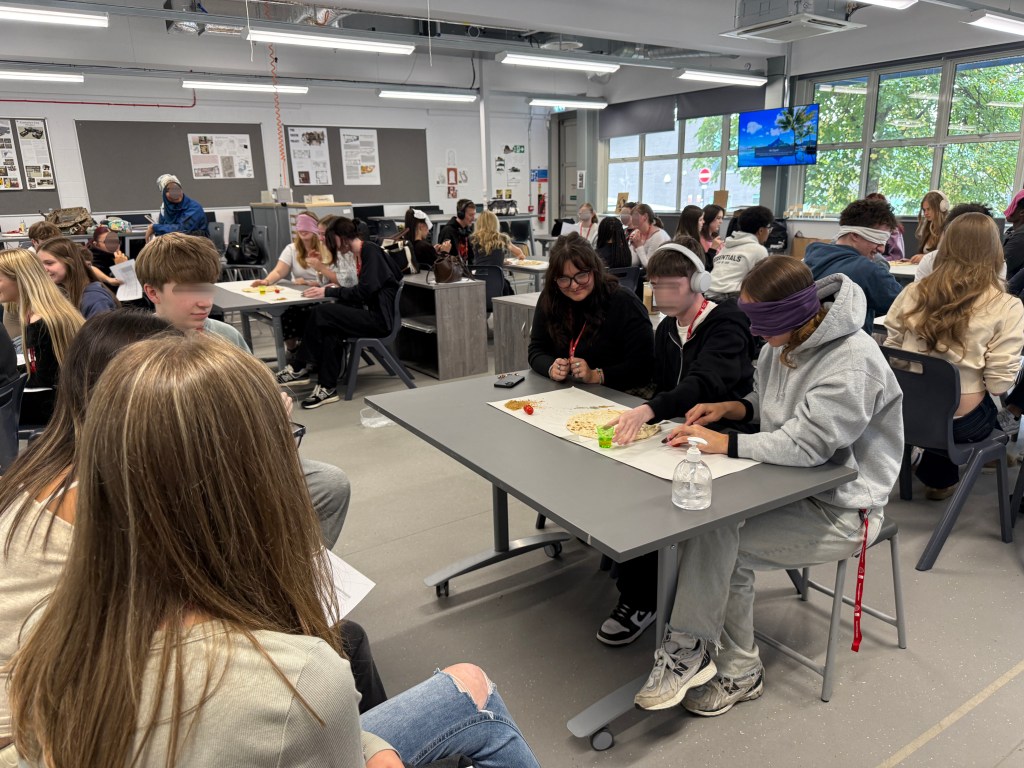
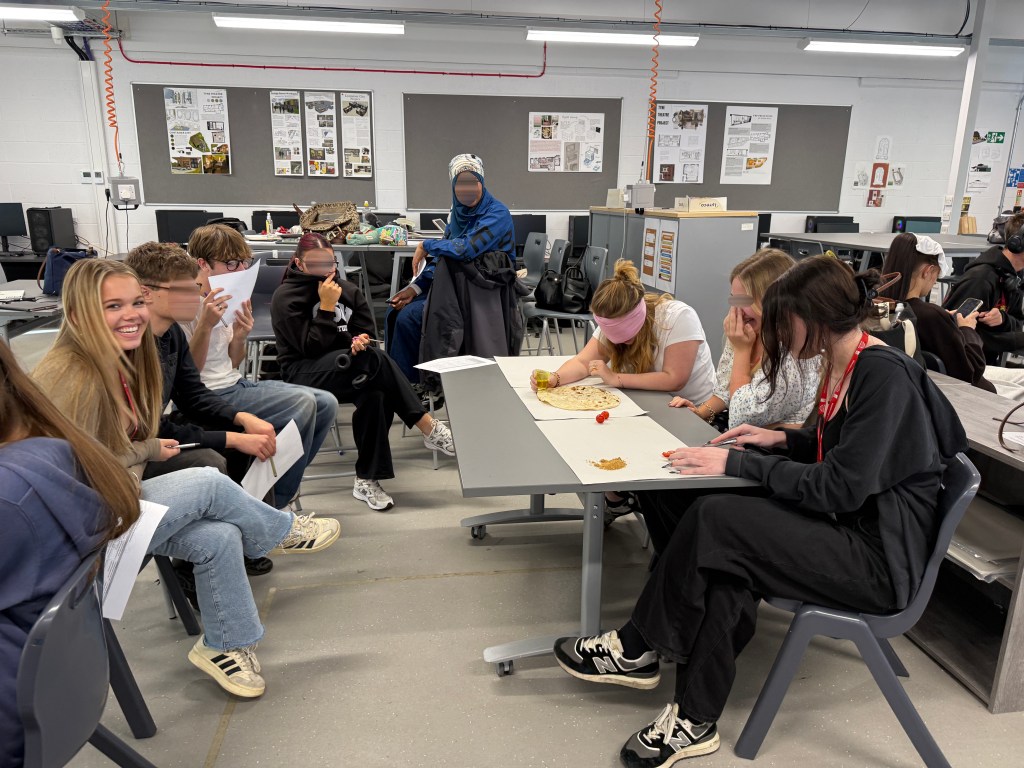
The Activity
The objective of the task was to strengthen soft skills—communication, collaboration, and teamwork—skills crucial for interior design and architecture students.
To make the activity engaging and playful, I asked students to build a sandwich as a team, something they never expected to do on this course. However, I tweaked it to include some constraints on the sensory dimensions. Each group had three contestants and four observers/examiners:
- One contestant was blindfolded.
- Another could not speak.
- The third wore headphones blasting music, blocking sound.
Meanwhile, the observers had each a sheet that showed the rubric they will use to assess the team’s performance. The rubric included five criteria: communication, collaboration, teamwork, presentation, and problem solving. Each criteria had a clear explanation for each of the fail/pass/merit/distinction scale—the same method used later for their vocational projects marks.
Ingredients and Cultural Twist
To add a cultural layer, I introduced ingredients that were unfamiliar to many – Middle Eastern, Asian Food. One sandwich used hummus, olive oil, and pickles; the other combined zaatar, olive oil, and tomatoes. Many students knew hummus, but zaatar was entirely new to them (thyme with sumac and sesame seeds). For both sandwiches, naan bread was used, I got it warm and fresh from the bakery. All of these ingredients activated olfactory sense with their strong smells especially the fresh bread and zaatar and pickles. This became not only a sensory experience but also an introduction to different cultures through food.
Dynamics in the Classroom
The class was large, so I divided them into two groups of 23. To encourage interaction across social circles, I deliberately mixed students from different friendship groups. For those who felt anxious, I paired them with at least one familiar partner to make the task less stressful.
Before starting, students sanitized their hands, prepared their stations, and received a clear explanation of safety and allergy considerations—no sharp tools were involved. Then the game began: they had four minutes to complete the sandwich.
The results were hilarious. Contestants stumbled, laughed, and improvised while their peers who were observing, enjoyed the performance, laughed, giggled, and even some captured the special moments on video. Even the shy students who usually avoided participation were smiling, engaging, and working with others. The vibes in the classroom were high with energy, laughter, fun and playfulness. A small tweak to make learning more embodied, fun and playful.
Reflection and Learning
Afterwards, each examiner wrote their individual marks, compared them with peers in their group, and reached an agreement on final scores for the team building the sandwich. They then shared their evaluations with the whole class, sparking discussion about communication gaps and teamwork strategies that would have made the collaboration more effective.
As a class, we reflected on how these lessons connect to interior design and architecture practice, where collaboration and communication are vital to ensure a successful project where different disciplines are included (mechanical, electrical, landscape, structure, fire and health safety, manager, client……) .
 Nagham El Elani
Leave a comment